Lower back pain from sitting: stretches and exercises that help
By the Relief team · Updated 27 November 2026 · Reviewed by a physiotherapist
The short answer
For everyday lower back pain, staying active and doing regular exercise is the most reliable self-help. A Cochrane review found that exercise probably reduces long-lasting lower back pain compared with no treatment. Gentle movement, core and hip strength and a couple of stretches, about 10 minutes a day, is a good place to start.
Staying in one position for hours often leaves your back stiff and sore. Your hips stay bent, your trunk muscles do little work and your back stays still.
Research has not shown that one 'bad' posture causes back pain. What helps most is changing position often and keeping your back and hips strong and moving.
What the research says
A 2021 Cochrane review of exercise for chronic lower back pain found, with moderate certainty, that exercise reduces pain compared with no treatment, usual care or placebo, by about 15 points on a 0 to 100 scale.[1]
A review of reviews found no consensus that any specific spine posture causes lower back pain. Moving and changing position matter more than finding the perfect way to sit.[2]
NHS advice for back pain is to stay active, keep up daily activities, avoid long periods in bed and try back exercises and stretches.[3]
The 7-minute routine
The first move is done on a chair. Cat cow, bird dog and the glute bridge need a mat or carpet. If you cannot get down to the floor, do the seated pelvic tilts, the standing hip flexor stretch and the seated figure 4.
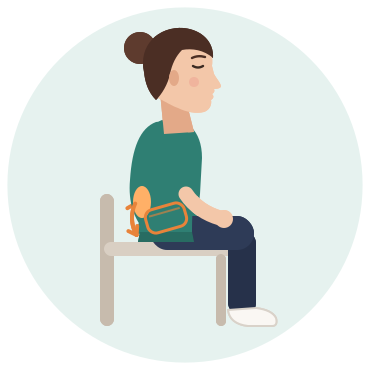
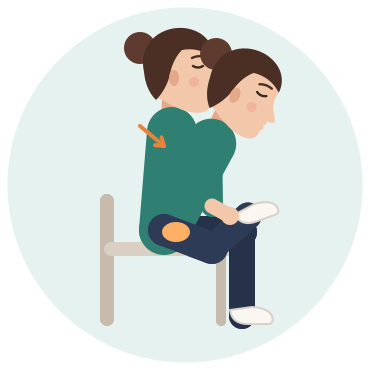
1 Seated pelvic tilts
On a chair · 10 reps
Sit near the front of your chair, feet flat.
Roll your pelvis forward so your lower back arches a little.
Roll it back so your lower back rounds a little.
Keep the movement small and smooth.
Careful: Stay in a pain-free range.
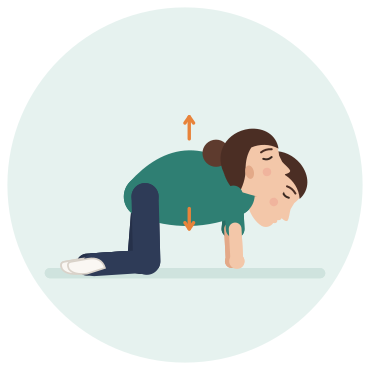
2 Cat cow
On the floor · 8 reps
Get on your hands and knees on a mat, hands under shoulders, knees under hips.
Breathe out and round your back up toward the ceiling.
Breathe in and let your back sag gently, looking slightly forward.
Move slowly with your breath.
Careful: Stay in a pain-free range.
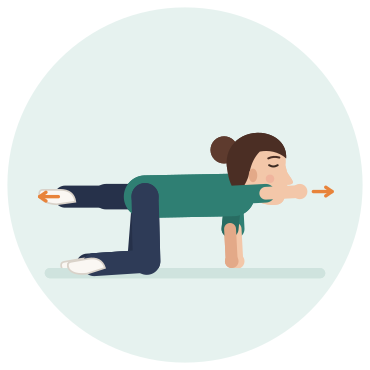
3 Bird dog
On the floor · 4 reps each side, hold 8 seconds each
Get on your hands and knees on a mat.
Reach one arm forward and the opposite leg back until both are level with your body.
Keep your hips level, as if a glass of water sits on your back.
Hold, return, then switch sides.
Careful: Do not lift the leg higher than your body.
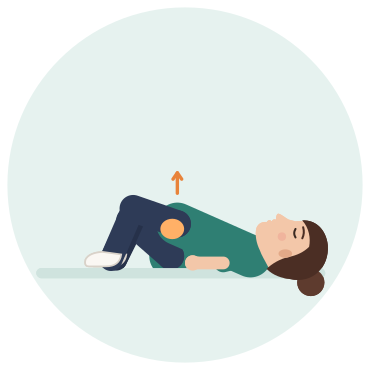
4 Glute bridge
On the floor · 2 sets of 8 reps, hold 3 seconds each
Lie on your back on a mat, knees bent, feet flat.
Push through your heels and lift your hips.
Stop when your shoulders, hips and knees make a line. Squeeze your glutes.
Lower slowly.
Careful: Lift with your glutes, not your lower back.
5 Standing hip flexor stretch
Standing · Hold 30 seconds each side
Stand tall and step one foot back.
Tuck your tailbone under, as if flattening your lower back.
Feel a stretch at the front of the back hip. Do not arch.
Hold and breathe, then switch sides.
Careful: Do not arch your lower back.
6 Seated figure 4
On a chair · Hold 30 seconds each side
Sit tall near the front of your chair.
Rest one ankle on the opposite knee.
Lean forward a little with a straight back until you feel the stretch in your hip.
Hold, then switch sides. Do not push the knee down.
Careful: Do not push the knee down.
How to do it right
Do it every day, or at least on work days. The studies that found less pain used short sessions repeated for weeks, not one long session.
Aim for a stretch of about 4 or 5 out of 10. Strength moves can feel like effort, but they should not cause sharp pain.
Mild discomfort up to about 3 out of 10 is fine if it settles by the next morning. Skip a move if the pain is sharp or above 5 out of 10. If pain spreads down an arm or leg, or you feel numbness, tingling or dizziness, stop and see a doctor.
Breathe normally the whole time. Do not hold your breath.
Stop searching for exercises
Relief is the simple, affordable way to ease neck and back pain from sitting. Ten minutes a day, picked for your body. Relief builds your daily plan from a short quiz and guides you through every move with a timer.
What is the fastest way to relieve lower back pain from sitting?
Get up and move. Walk for a few minutes, then do a few gentle moves like seated pelvic tilts or a standing hip flexor stretch. For lasting relief, exercise regularly: the studies showing less pain looked at weeks of exercise, not a single session.
Should I rest when my lower back hurts?
Usually not for long. NHS advice is to stay active and avoid long periods in bed, because movement tends to help everyday back pain settle.
Are stretches or strength exercises better for lower back pain?
Both have a place. A mix of gentle movement, strength for your trunk and hips, and a few stretches is a sensible routine, and the one you will actually do every day is the right one.
Can I do lower back exercises on a chair?
Yes. Seated pelvic tilts and the seated figure 4 are done on a chair, and the hip flexor stretch is done standing. The floor moves add more, but you can start without them.
Is sitting with bad posture causing my back pain?
Probably not on its own. Research has not found that one posture causes back pain. Sitting still for a long time in any position can leave your back stiff, so change position often.
Hayden JA et al. Exercise therapy for chronic low back pain. Cochrane Database of Systematic Reviews, 2021. Link
Swain CTV et al. No consensus on causality of spine postures or physical exposure and low back pain: a systematic review of systematic reviews. J Biomech, 2020. Link
This page is general information about exercise for everyday stiffness and tension. It is not medical advice and does not diagnose or treat any condition. If your pain is severe, started after an injury, or comes with numbness, tingling or weakness, see a doctor before you exercise.
 Relief