Tension headaches from screen work: neck exercises that can help
By the Relief team · Updated 27 November 2026 · Reviewed by a physiotherapist
The short answer
Tension headaches feel like pressure or a tight band around your head and often come with a stiff neck after a long day at a screen. Regular neck and shoulder exercise can make them less frequent: in one trial, office workers who trained 2 minutes a day for 10 weeks had headaches on fewer days. It is a long-term habit, not a treatment for a headache you have right now.
A tension headache usually feels like pressure or tightness on both sides of your head, sometimes with tender neck and shoulder muscles. Stress, poor sleep, caffeine and long hours at a screen are common triggers.
Tension headaches often come with tight, tender neck and shoulder muscles. Exercises that strengthen and relax those muscles are one of the things that can help, together with sleep, breaks and keeping an eye on caffeine and painkiller use.
What the research says
In a trial with 198 office workers with frequent neck and shoulder pain, those who did 2 minutes of resistance exercise a day for 10 weeks had headaches on fewer days than a control group: headache frequency fell by 43% from where it started. The headaches they still had were not milder or shorter.[1]
The NHS lists stress, sleep problems and caffeine as common triggers, and warns that taking painkillers too often can cause rebound headaches. It suggests exercise and other relaxation activities as self-help.[2]
The 7-minute routine
Do this once a day, ideally before the end of your work day, not only when a headache starts. The slow breathing at the end can also be used on its own whenever you feel tension building.
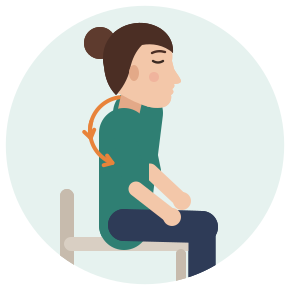
1 Shoulder rolls
On a chair · 10 reps
Sit tall with your arms relaxed.
Breathe in and lift your shoulders toward your ears.
Roll them back and squeeze your shoulder blades a little.
Breathe out and let them drop down.
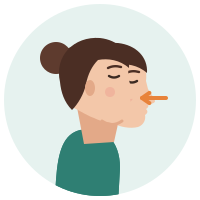
2 Chin tucks
On a chair · 8 reps, hold 5 seconds each
Sit tall and look straight ahead.
Slide your chin straight back, like making a double chin.
Keep your eyes level. Do not nod down.
Hold, then let your head glide forward to neutral.
Careful: Do not nod down. Stop if you feel dizzy.
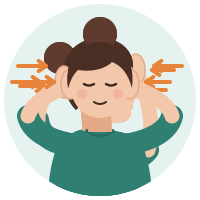
3 Neck press holds
On a chair · 4 reps, hold 5 seconds each
Sit tall. Put your palm on your forehead.
Press your head into your hand with light effort. Your head does not move.
Hold, then repeat with your hand on the back of your head and on each side.
Keep breathing the whole time.
Careful: Keep it to about a third of your effort and keep breathing.
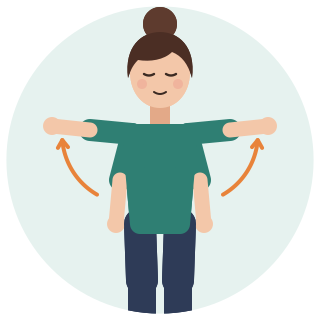
4 Side raises
Standing · 2 sets of 10 reps
Best with two 0.5 L water bottles or a light band
Stand tall, a water bottle in each hand if you have them.
Lift your arms out to the sides up to shoulder height, thumbs slightly up.
Pause at the top.
Lower slowly, taking about 3 seconds.
Careful: Stay below shoulder height if anything pinches. Stop if pain runs down your arm.
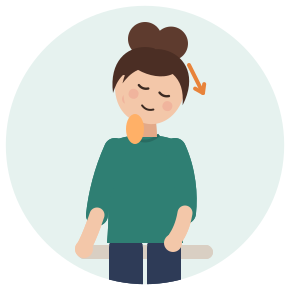
5 Upper trap stretch
On a chair · Hold 30 seconds each side
Sit tall and hold the side of the chair seat with your right hand.
Tilt your left ear toward your left shoulder.
Stop at a gentle stretch on the right side of your neck. No pulling.
Hold and breathe, then switch sides.
Careful: No bouncing and no pulling your head with your hand.
6 Slow breathing
On a chair · Hold 60 seconds
Sit comfortably and let your shoulders drop.
Breathe in through your nose for 4 seconds.
Breathe out slowly for 6 seconds.
Repeat. Let your shoulders get heavier with each breath out.
How to do it right
Do it every day, or at least on work days. The studies that found less pain used short sessions repeated for weeks, not one long session.
Aim for a stretch of about 4 or 5 out of 10. Strength moves can feel like effort, but they should not cause sharp pain.
Mild discomfort up to about 3 out of 10 is fine if it settles by the next morning. Skip a move if the pain is sharp or above 5 out of 10. If pain spreads down an arm or leg, or you feel numbness, tingling or dizziness, stop and see a doctor.
Breathe normally the whole time. Do not hold your breath.
Stop searching for exercises
Relief is the simple, affordable way to ease neck and back pain from sitting. Ten minutes a day, picked for your body. Relief builds your daily plan from a short quiz and guides you through every move with a timer.
Can neck exercises get rid of a tension headache right now?
They are not a quick fix for a headache you already have. Their main benefit is long term: in research, daily exercise over 10 weeks meant fewer headache days. Gentle movement and slow breathing may still feel good during a headache.
How do I know if my headache is a tension headache?
Tension headaches usually feel like pressure or tightness on both sides of the head, and you can usually carry on with your day. Throbbing pain on one side, feeling sick or sensitivity to light may point to migraine. If you are not sure, ask a doctor.
Why do I get a headache after working at the computer?
Common reasons include long hours in one position, stress, poor sleep, too much caffeine and skipping breaks. Tight, tender neck and shoulder muscles often come with it.
How often should I do the exercises?
Every day, or at least every work day. The trial that found fewer headaches used sessions 5 days a week.
Can taking painkillers too often make headaches worse?
Yes. The NHS warns that taking painkillers too often or for a long time can cause rebound headaches. If you need them several times a week, talk to a doctor.
Andersen LL et al. Effect of brief daily exercise on headache among adults: secondary analysis of a randomized controlled trial. Scand J Work Environ Health, 2011. Link
This page is general information about exercise for everyday stiffness and tension. It is not medical advice and does not diagnose or treat any condition. If your pain is severe, started after an injury, or comes with numbness, tingling or weakness, see a doctor before you exercise.
 Relief